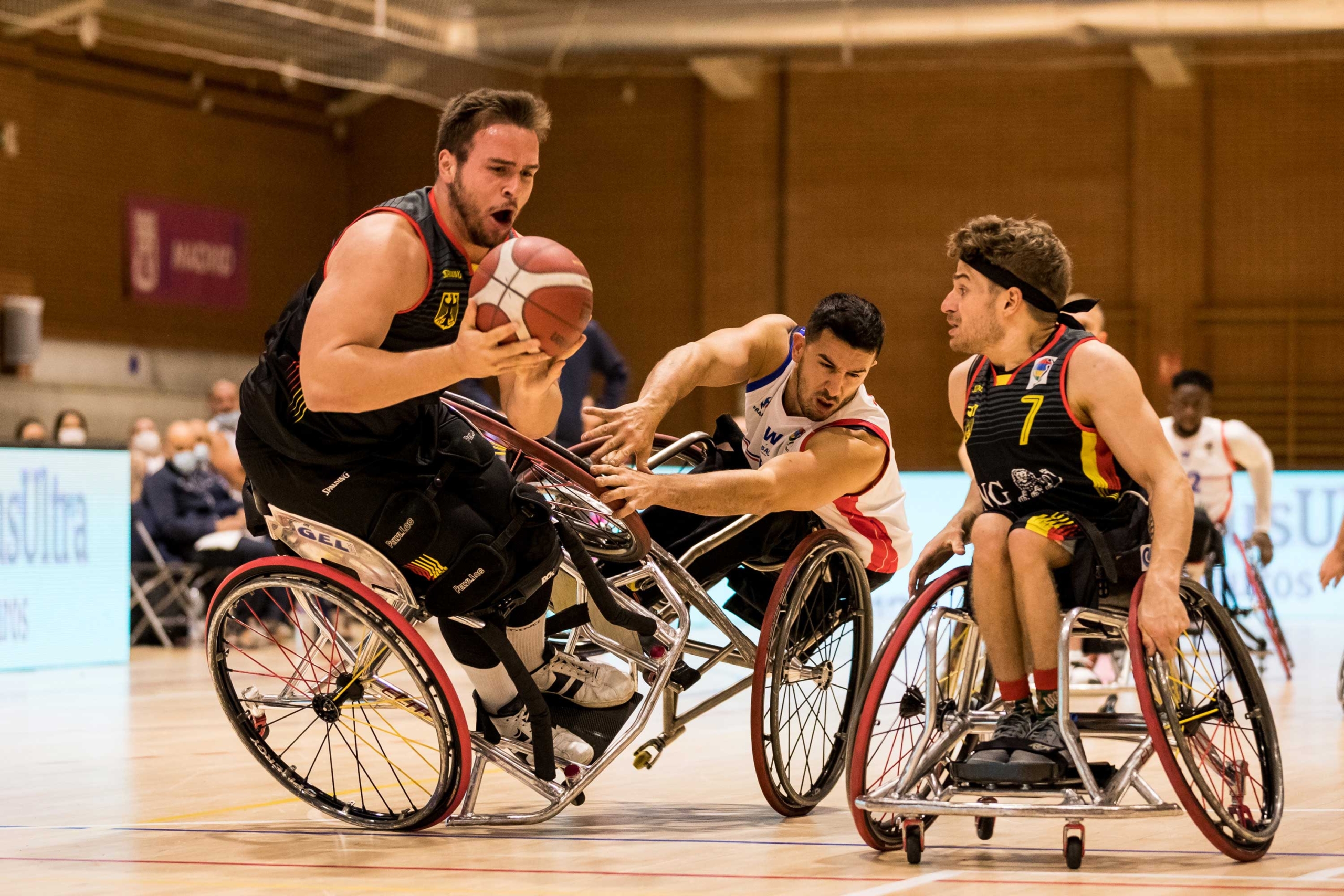
Staying fit as a wheelchair user can be hard: Firstly, gyms have their fixed seats for weightlifting machines that cannot be removed. Additionally, treadmills and cycling machines are made specifically for working legs. Finally, the pathways are filled with equipment and too narrow for wheelchairs to squeeze through.

About 50% of people with a mobile disability don’t get any aerobic exercise at all.
This is where adaptive sports come in. Not only do adaptive sports make it easier for you to exercise, but it also provides a community driven path to a fit and healthy body.

Why Adaptive Sports Outperform Regular Workouts
The hardest part about staying fit, disability or not, is to start. While some adaptive sports require adaptive wheelchairs, sports like wheelchair track, adaptive pickleball/tennis, adaptive swimming, and sled hockey can provide fun fitness with minimal cost. If starting with no cost and moving slow feels more comfortable, starting with an at home fitness course (fun seated workout for wheelchair users) can be a great way to get started without any equipment.
1. High Efficiency Cardiovascular Health
Reaching a target heart rate using only your upper body muscles requires intentional and intense work. For example, adaptive sports like wheelchair basketball, sled hockey, and wheelchair rugby (quad rugby) require short bursts of intense energy and sudden shifts in direction. This combination offers a good and healthy workout without feeling like getting fit is a chore.
2. Functional Muscle Balance
Daily wheel movement focuses primarily on the muscles that push the wheelchair: The chest, triceps, and front shoulders. Over time, this imbalance leads to rounded shoulders and rotator cuff strains. Sports like adaptive rowing, handcycling, and kayaking place heavy emphasis on the pulling muscles: latissimus dorsi (side of the back), rhomboids (upper back), and rear deltoids (back of the shoulder). These adaptive sports help keep a muscle balance and help protect joint integrity for daily movements.
3. Daily Activity And Mental Health
To stay fit, consistency is a key component. While going outside daily will improve fitness, it also offers increased mental health. Proven by science, playing a sport increases mental health by a mile. In comparison, playing a sport improves mental health even more then just exercising alone due to community support and social connections.
4. Wheelchair Accessories
There are many accessories that can help a wheelchair user while playing. For example, RehaDesign’s wheelchair gloves will improve the grip on the wheelchair, thus improving mobility. Additionally, soft and plastic push rim covers are a great way to save your hands from pain while playing due to the metal and hard push rim.
Leave a Reply