Why we celebrate the ADA
Every July 26th, we celebrate the the Americans with Disabilities Act (ADA). Signed in 1990, the civil rights law changed the lives of many people. For wheelchair users, this is a day to reflect on previous hardships that led to a more comfortable life. With the protection of the ADA, cities were forced to rethink their physical structures.
Before the ADA, wheelchair users faced many daily challenges. Something so simple as crossing the street became a risky move as there were no curb cuts to smoothly exit the sidewalk on. Small trips to the store came with its own set of problems: narrow doorways, stairs, and no way to get on the public transit.

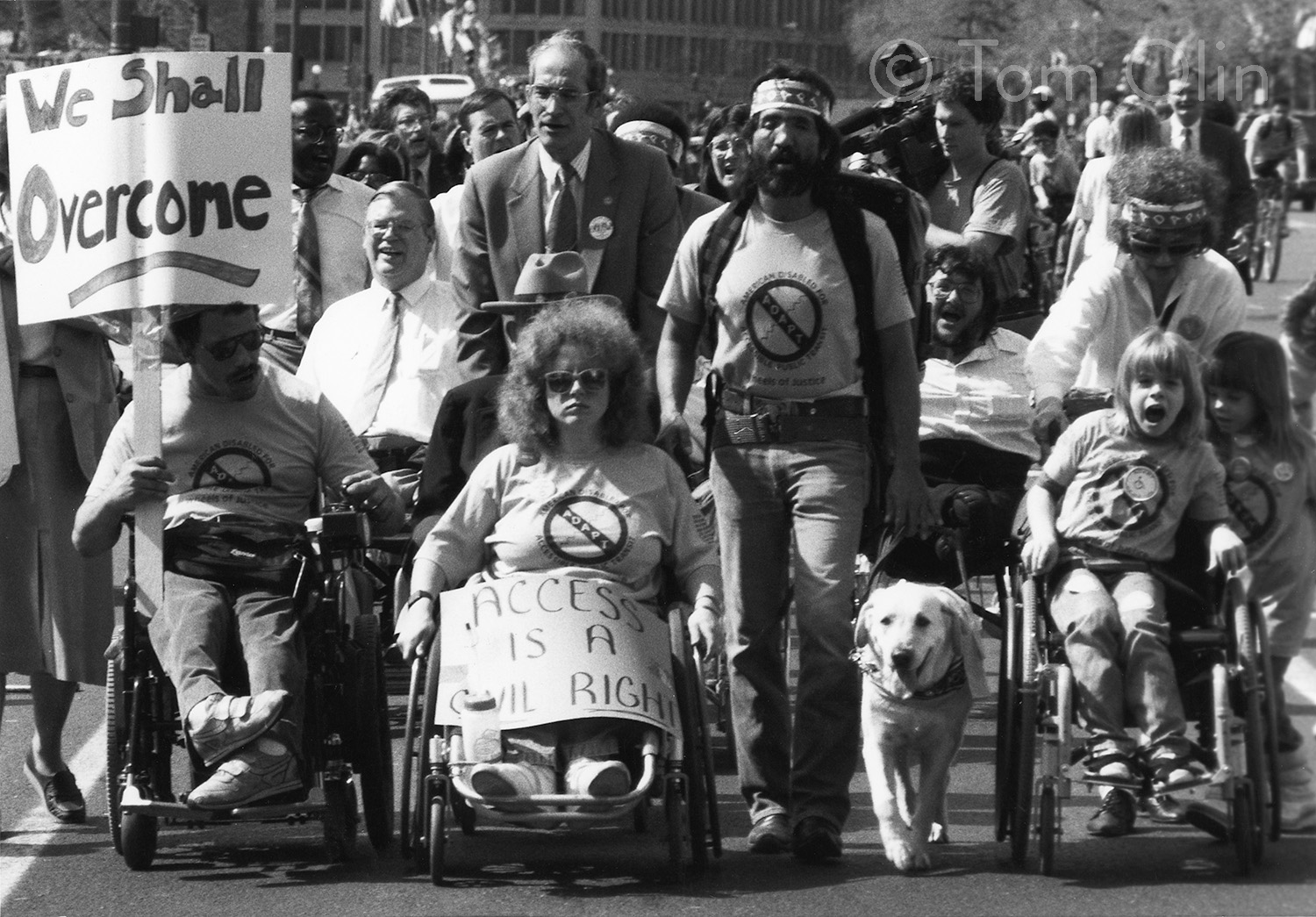
In march of 1990, over 60 activists left their wheelchairs to physically climb 83 steps of the US capitol to highlight lack of accessibility.
How the ADA has shaped our world
The ADA brought many changes in the layout of US cities. Sloped edges were introduced to sidewalks for safety reasons. Tie-downs were added to public transit so that the disabled community could easily travel around the city. Companies were forced to incorporate sliding doors wide enough for wheelchairs and ramps to their main entrance.
This shift in history happened due to dedicated activists. For example in 1978, a group of protesters gathered and blocked public transit entrances in Denver Colorado to highlight their lack of accessibility. Movements like these helped the disabled to spread awareness to politicians nationwide.
The legislation divides its protections into five sections: employment discrimination, state and government services, public accommodations, telecommunications relay services, and miscellaneous provisions.

Focus For The Future
Basic compliance is only a starting point. Advocates are pushing for greater universal designs that will further benefit the disabled. Our streets should accommodate everyone naturally, instead of making wheelchair users go to one specific entrance that no one uses.
Maintenance also offers a problem. What should people do once an elevator is broken, or a street leading to a ramp entrance is being reconstructed? Clearly, there is still work to be done for a brighter and more easily accessible future for all people.
RehaDesign is proud to serve our community of wheel chair users through products like wheelchair tire covers, wheelchair gloves, and wheelchair push rim covers. We salute the activists who made the ADA possible, and continue to make progress for our community.
Leave a Reply